

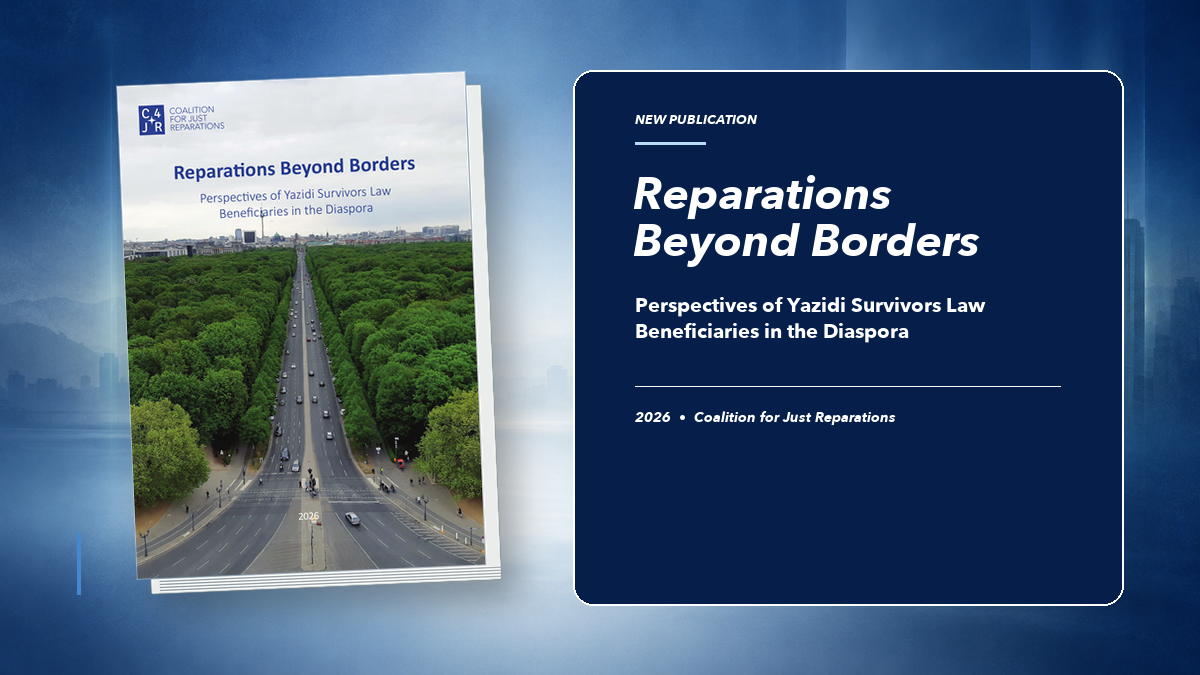
As more Yazidi Survivors Law (YSL) beneficiaries live outside Iraq, C4JR examined how survivors in Germany, Australia, and Canada experience the YSL application process and access compensation and other reparative measures from abroad.
The findings show that while the reparations programme has adapted to serve survivors living abroad, significant barriers remain. 92% of respondents rely on a representative in Iraq to receive their compensation, while many reported uncertainties about international transfers, fees, taxation, and social welfare rules in their countries of residence.
Awareness of other YSL benefits is also limited: 60% did not feel fully informed about available benefits, and 98% said they had not been contacted about symbolic reparations. Survivors identified the search for missing persons, recovery and return of remains, and justice and accountability as especially important.
We hope that this study will initiate a broader discussion on rethinking reparations in today’s globalized world and highlight the need for greater flexibility in accessing and delivering reparative measures across borders. It recommends stronger outreach, clearer information, secure ways to receive compensation abroad, improved consular services, and procedures that reflect the realities of survivors living in the diaspora.
C4JR Criminal Justice Working Group Statement on the International Crimes Law – Following the First Reading on 21 September 2026
The Coalition for Just Reparations (C4JR) welcomes the news that the first reading of the International Crimes Law took place on 21 September before the Council of Representatives. The adoption of legislation codifying core international crimes - war crimes, crimes...